


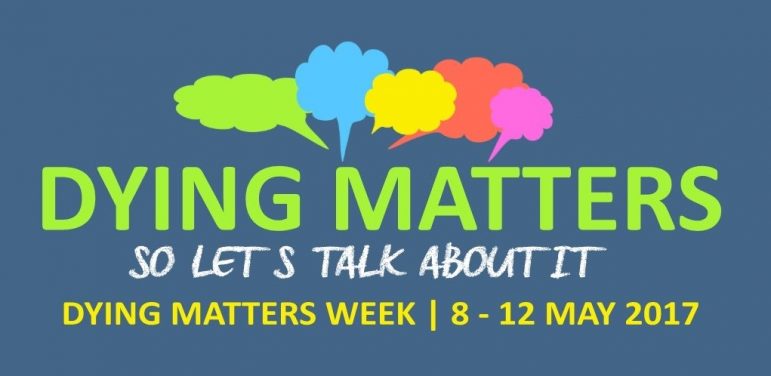
SEVERAL county-wide health organisations have joined forces to raise awareness of end of life services in Worcestershire as part of Dying Matters Week which runs from Monday (May 8) to next Sunday (May 14).
Members of the Worcestershire Palliative and End of Life Care Network – set up in 2008 – share experiences, good practice and resources to ensure services keep improving.
Among those on the network are the Primrose, Acorns, Kemp and St Richard’s Hospices, Worcestershire Acute NHS Trust, Worcestershire Health and Care NHS Trust, Marie Curie, Macmillan Cancer Support, West Midlands Ambulance Service, Worcestershire Association for Carers, Clinical Commissioning Groups and Worcestershire County Council.
Its successes to date include introducing county-wide policies on Advance Care Planning, helping patients take control of what happens to them in the last stages of life and pioneering a web-based electronic platform for the sharing of palliative and end of life care information. This is for patients who give their consent to have their medical records shared with the appropriate professionals who are providing their care enabling more joined up working. Importantly, the network has secured investment in the provision of seven-day-a-week access to palliative care nurses.
Other schemes include the introduction of ‘Just in Case’ boxes ensuring patients have the necessary medication at home ‘just in case’ they need it urgently as well as anticipatory prescribing of medication to ensure people have access to symptom-controlling medication at night and at weekends before they develop an urgent need.
Dr Maggie Keeble, end of life champion, GP and chair of the network said every year more than 5,000 people in Worcestershire die and many more were diagnosed with cancer and other serious conditions.
“Thankfully, and increasingly, a cancer diagnosis, for example, is not necessarily a death sentence but can of course still be a very traumatic experience.
“This can be a very lonely time for people and their families.”
She added, to coincide with Dying Matters Week 2017, the network was keen to raise awareness of the county’s organisations which could support people during those times.
“Our aim is to provide a consistent approach for patients, their carers and family members across all the organisations who make up the Network.”
In response to the national framework, ambitions and end of life care, the network has developed a local framework to improve care.
They vow that each person is seen as an individual, each person has fair access to care, to maximise comfort and wellbeing, that care is co-ordinated, that all staff are prepared to care and that each community is prepared to help.
Dr Keeble said by working together, network members were optimistic they could achieve their own ambition to improve care for all people in Worcestershire who are approaching the end of their lives despite the very challenging pressures on the current system.”
During Dying Matters Week network members are organising various activities.
The Primrose Hospice is promoting Dying Matters Week through an online campaign, using social media sites, including Facebook and Twitter.