



A WETLAND in Droitwich has been restored to provide a habitat for all sorts of existing and new wildlife.
Coney Meadow, a wetland where a reed bed was installed, had become overgrown and in need of maintenance when Wychavon District Council and the Canal and River Trust elected to restore it.
To carry out the works, they enlisted the help of The Rothen Group – marine engineering specialists. The habitat was restored within five weeks ahead of this year’s bird nesting season in February.
Speaking on the project, Charlotte Rothen, director and ecologist at The Rothen Group said: “We knew biodiversity sat at the heart of it.
“Our team worked incredibly hard to action the council and trust’s plans and create the new spaces for animals and plants to thrive.
Those partnering on the project are now highlighting the positive impact the work has had on creating new wildlife habitats for various animals. The area was already an existing habitat for birds such as swallows and skylarks.
Councillor Beverley Hardman, responsible for environment at Wychavon District Council said: “Across the country, local authorities are taking proactive steps to increase the ecology in their region so native plants and species aren’t impacted due to housing developments and other infrastructure projects.”
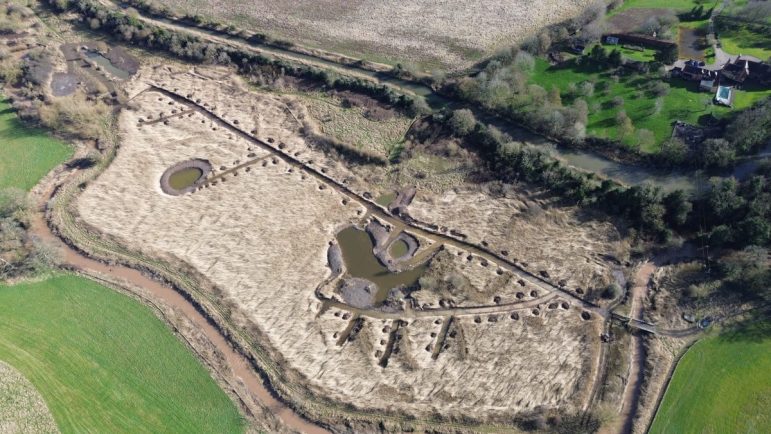
The works included removal of the overgrown reeds to allow more space for existing and new plants. The existing overspill structure connecting the wetlands to the local canal was deliberately blocked using silt,
This has allowed the existing water table in the reed bed to increase, providing more space for underwater plants and creatures to thrive.
Six new ponds were also dug, which varying in size and depth have been created in shelves to offer underwater ledges which create different microhabitats for varying species to thrive. For example, male newts prefer cooler, deeper water whereas females live near plants closer to the surface to lay their eggs.
A network of scrapes walso dug so aquatic animals and plants could grow. Scrapes are shallow depressions in the ground which fill with water throughout the year. These 2.5 metre depressing serve as feeding ground for local birds and other species. The scrapes also serve as a water management system, helping prevent the meadow from flooding during storms and heavy rainfall.
Lastly, above water, the project team set out to create a range of hibernacula so hibernating animals have a safe space during winter months. These were created using the waste generated throughout the project, including the reeds, soils and five trees which were cut down. Offering a thick layer of insulation, the hibernacula would attract species such as hedgehogs and grass snakes for the next winter.
Following the completion of the project, Coney Meadow offered a wide range of new habitats to grow the biodiversity in the region, encouraging new species to both breed and live.
Shaun Pope, ecologist at Canal & River Trust, said: “Coney Meadow provides a valuable array of habitats for a large number of important species.
“The habitat improvements carried out will contribute to safeguarding the location as an important wildlife site.”