

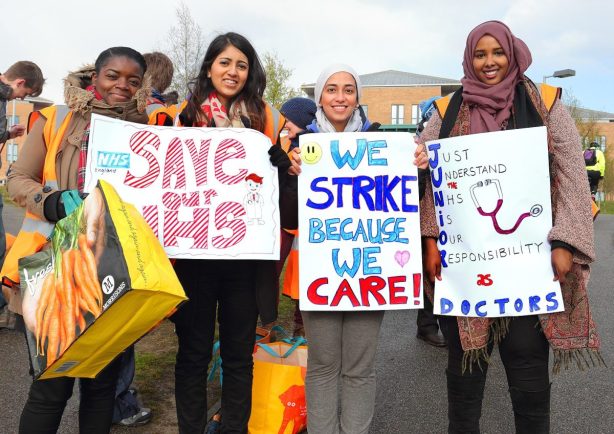
Hospitals across the country are bracing for disruption next month as junior doctors prepare to stage another walkout in a dispute over pay and job security.
The British Medical Association (BMA) announced that resident doctors (previously known as junior doctors) will strike for five days from November 14 to 19, after talks with the Government broke down.
The BMA is demanding a 29 per cent pay rise, claiming years of below-inflation increases have left new medics struggling. However, resident doctors have already received a 5.4 per cent average pay rise this year and nearly 29 per cent over the past three years, among the highest increases in the public sector.
Local NHS trusts are warning that the strike could force the cancellation of thousands of appointments and operations, adding pressure to hospitals already under strain as winter approaches.
Dr Jack Fletcher, chair of the BMA’s resident doctors committee, said the union had “spent the last week in talks with the Government, pressing the Health Secretary to end the scandal of doctors going unemployed.”
He said the BMA wanted a long-term deal to “gradually reverse the cuts to pay over several years,” but accused Health Secretary Wes Streeting of offering only “vague promises” and showing “little understanding of the crisis here and now.”
Streeting hit back, describing the latest strike as “preposterous.”
“The BMA have rushed headlong into more damaging strike action a week after its new leadership opened discussions,” he said. “These unreasonable and unnecessary strikes do not have the public’s support. The BMA’s reckless posturing will harm patients, leave other NHS staff to pick up the pieces, and divert resources away from rebuilding the NHS.”
The strike will be the 13th multi-day walkout since March 2023, prolonging a dispute that began under the previous government but has continued despite Labour’s promise to end NHS industrial unrest.
Conservative leader Kemi Badenoch criticised Labour for scrapping legislation that would have ensured minimum staffing levels during strikes.
“Doctors should not be going on strike,” she said. “Conservative policy is to ban strikes by doctors in the same way the police and the army cannot go on strike. We need to have adequate levels of healthcare.”
Local NHS officials are urging patients to attend appointments unless contacted directly and to use NHS 111 for non-emergency care.
With both sides showing little sign of compromise, patients and hospital staff across the country face yet another round of disruption, and growing frustration that the government’s promise to stabilise the health service remains unfulfilled.
Are you a resident doctor, or do you have views on the strike? We’d like to hear from you. Let us know your thoughts in the comments below or email the editor.
Main Image Credit: Roger Blackwell Creative Commons Attribution 2.0 Generic license.