


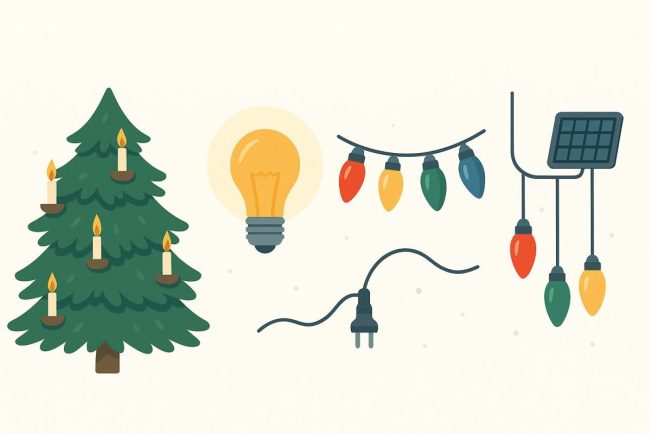
The glow of Christmas lights has become one of the most recognisable features of the festive season, but the journey from simple candlelit decorations to today’s energy efficient LED displays has been long and shaped by changing technology, safety standards, and cultural trends.
The history of Christmas lighting in Britain reflects both the practical challenges of illumination and our country’s evolving relationship with festive celebration.
Victorian origins, a time of candlelit trees
Christmas trees became popular in Britain during the nineteenth century, largely due to the influence of Queen Victoria and Prince Albert. Early decorations often included real candles clipped to the branches. Although visually striking, these candles posed a clear fire risk. Families usually lit them only for short periods, with buckets of water or sand kept nearby. Many surviving Victorian accounts emphasise the dangers, and as a result the practice remained cautiously observed.
By the late Victorian period, some wealthier households experimented with early battery powered lamps or lanterns, but these were rare and not widely accessible. Candlelit trees continued to dominate festive displays well into the early twentieth century.
The arrival of electric lights
Electric Christmas lights began appearing in Britain in the early 1900s, several decades after the first electric tree lights were displayed in the United States. Early versions used carbon filament bulbs that were fragile and expensive, making them a luxury item initially limited to public buildings and affluent homes.
By the 1920s and 1930s, improvements in manufacturing allowed electric lights to become more affordable. Festive lighting gradually moved beyond indoor trees to shop windows, high streets, and civic buildings. Some of the earliest organised street displays appeared in London during the 1950s, helping spark the long tradition of high street Christmas illuminations.
Safety innovations, making lights more reliable
As electric lighting spread, so did concerns about electrical safety. Early string lights were prone to overheating, and wiring standards were inconsistent. In response, British safety regulations tightened during the mid twentieth century.
Key developments included insulated wiring, fused plugs, and fire retardant materials. By the 1970s, Christmas lights sold in the UK were subject to formal electrical safety standards, reducing the risk of short circuits and fires. The introduction of low voltage transformer systems made decorative lighting even safer, particularly for outdoor use where weather exposure is a factor.
The shift to LEDs and improved energy efficiency
The most significant modern change in Christmas illumination has been the widespread adoption of LED, or light emitting diode, technology. LED Christmas lights first became commercially available in the 1990s, but they gained mass popularity in the UK during the 2000s as prices fell and environmental awareness grew.
LED lights consume far less electricity than traditional incandescent bulbs. While older filament based lights convert much of their energy into heat, LEDs remain cool to the touch and use a fraction of the power. Estimates suggest that LED Christmas lights use up to 75 percent less energy compared with incandescent alternatives, making them both cost effective and significantly more environmentally friendly.
They also last longer, with many LED sets capable of tens of thousands of hours of use. This reliability has made them the preferred choice for councils organising large public displays as well as for households decorating their homes.
Modern displays and creative technology
Christmas lighting in Britain today ranges from modest home decorations to large scale light installations that draw visitors from across the country. Town centres often feature programmable displays, allowing colour changes, patterns, and synchronised effects. Some homes also use smart lighting systems that can be controlled via mobile apps.
Solar powered Christmas lights have become more common, providing an energy efficient option for gardens and outdoor decorations. Meanwhile, advances in battery technology have expanded opportunities for safe illumination away from mains electricity.
A tradition shaped by safety, innovation, and creativity
From the flicker of Victorian candles to the vivid sparkle of modern LEDs, Christmas lights in Britain have evolved with advances in technology and safety standards. What remains unchanged is their role in creating a sense of warmth and celebration. As people gather to enjoy festive displays each winter, they are participating in a tradition shaped by more than a century of innovation and craftsmanship.
We love showcasing the houses and streets across the area that really go to town with their Christmas lights. If this sounds like you, feel free to send us your pictures and you might just find your display featured in the paper. It is a wonderful way to celebrate the creativity and festive spirit within our community.