


Healthy Lifestyle Test: Why Everyone Should Get Health Screenings

Making your health a priority, no matter your age, is vital for you to have a well-balanced life, and if we look at the COVID-19 pandemic, it is relevant now more than ever. One way to ensure your body gives you the years you deserve is to have a health screening test at least once a year. Not everyone will need all the essential screenings; however, you need to speak to your GP to decide what’s needed. It might also mean that, at first, you will need to have all tests done and work through a process of elimination. Let’s look at which health screenings you need and why you need to get them.
Screening for COVID-19
COVID-19 is still with us. Most countries have learned to adapt and accept that we must live with it. Since the coronavirus affects people differently, it makes it one of the essential screenings. Most people infected with COVID-19 will have moderate to mild symptoms, but this does not mean you are in the clear. Furthermore, if you are vaccinated, it dramatically reduces your chance of catching the coronavirus; however, you can still get it. If you display symptoms, do the right thing and have yourself tested. It remains our responsibility to know our status.
Blood glucose, blood pressure, and cholesterol tests
This is a trio that can mean the difference between life and death. Furthermore, these three tests decide the level of your heart. How often should one get these checks? If you are over the age of 20, you must have a blood pressure check every two years, blood glucose, and a cholesterol test every two to four years. Once you reach the age of 40, you need to have these tests done once a year. Since these tests can uncover life-threatening illnesses, they should be high on your priority list. Also, keep in mind that COVID-19 can affect your blood pressure and blood glucose, so getting yourself tested as soon as possible is vital.
Check your skin
It comes as no surprise that most people don’t check their skin. Remember that the sun emits harmful rays that can cause severe skin problems such as cancer. It is also important to note that most people take their skin for granted because our skin repairs itself; however, this is not the case if you have skin cancer. Since it’s the largest organ in your body, you must protect it. But skin cancer is not the only problem. There is acne and eczema too. Remember that melanomas are more common than people realise, so have your skin checked.
HIV and STI
It is understood that sexual health is vital for long life. Checking your HIV status annually is always important, whether you are in a relationship or not. If you find yourself with an unfortunate positive status, you can live a relatively normal life with antiretrovirals, but if the illness goes undetected, it can lead to AIDS which could dramatically reduce your lifespan. With Sexually Transmitted Infections, it becomes a bit tricky. Many people live with STIs, and they are completely oblivious. Depending on the STI you have, your symptoms, such as burning or irritation in your reproductive organs, are tell-tale signs. If left untreated it can lead to infertility issues later on, so have these exams as regularly as possible. The Center for Disease Control and Prevention encourages regular testing to prevent and control any STIs

Your precious eyes
Millions of people walk around every day without knowing that they need a pair of spectacles. This is quite alarming. Good eye care is vital for balanced health and one way to ensure you stay on top of this is by seeing an optometrist. In an ideal world, all of us will have 20/20 vision, meaning we wouldn’t need an eye test or spectacles. But since this is not the case, everyone should take the time to analyse their eyes every year. If you do need spectacles, it’s recommended you get a new pair every two years. Screening tests will look out for retinopathy, enlarged optic nerves, glaucoma (the big one), retinal pigmentation, as well as dry eyes.
Further to this, and since we are living with the coronavirus, you might also want to have yourself tested for conjunctivitis or pink eye as it is commonly known. According to data, some doctors believe that between 1% and 3% of all people who have COVID-19 will experience conjunctivitis. So how does it tie into COVID-19? Well, the virus infects a tissue called the conjunctiva. This covers the white part of your eye. Remember to ask your doctor to look out for this as well.
Dental care
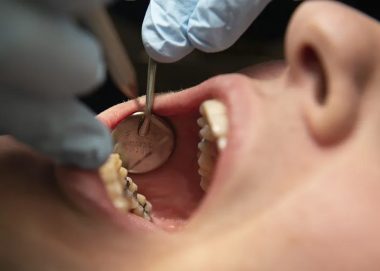
Few people enjoy visiting the dentist and most people don’t understand that dental care should be high on their priority list. Poor oral care has been proven to offer many risks including reducing your chance to fall pregnant. In men, poor oral care affects their sperm count, for women, the bacteria almost triple the chances of infertility. Good oral hygiene, as well as gum care, is related to pregnancy. This is only one aspect of screening and overall care. Your annual check-up with your dentist will tell you a lot about the state of your mouth. What shape your teeth are in, if your gums are healthy, as well as if you would need a filling now or in the future. These are the basics. Your annual assessment should also include a clean, as dentists take extra care to ensure plaque is removed.
These are just a few of the important health screenings everyone should get at least once a year and especially getting tested for COVID-19 as regularly as possible – remember, we are still living in a pandemic. It remains our responsibility to check on our health for better well-being today, and in the future.