


When it comes to moving large quantities of goods across the world’s oceans, vessel chartering services play a crucial role in international commerce. Whether you’re a business owner looking to transport bulk commodities or a logistics professional seeking efficient shipping solutions, understanding the intricacies of ship chartering can be the key to streamlining your supply chain and reducing costs.
What is Ship Chartering?
Ship chartering is the practice of hiring a vessel to transport cargo from one port to another. This flexible arrangement allows businesses to secure shipping capacity without the need to own and maintain their own fleet. Chartering can be tailored to meet specific needs, from single voyages to long-term contracts, providing a versatile solution for various shipping requirements.
Types of Ship Charters
There are several types of ship charters, each suited to different business needs and cargo types:
- Voyage Charter: The ship is hired for a specific journey between ports.
- Time Charter: The vessel is leased for a set period, allowing multiple voyages.
- Bareboat Charter: The charterer assumes full control and responsibility for the vessel’s operation.
- Contract of Affreightment (COA): An agreement to transport a specific quantity of cargo over a set time period.
The Benefits of Ship Chartering
Chartering a ship offers numerous advantages for businesses engaged in international trade:
- Flexibility to scale operations based on demand
- Access to specialized vessels for specific cargo types
- Reduced capital investment compared to owning ships
- Ability to optimize routes and schedules
- Potential for cost savings through bulk shipping
Navigating the Chartering Process
The ship chartering process involves several key steps:
- Identifying cargo requirements and suitable vessel types
- Researching and selecting potential charter companies
- Negotiating terms, including rates, dates, and conditions
- Drafting and signing the charter party agreement
- Coordinating logistics for cargo loading and unloading
- Managing the charter throughout its duration
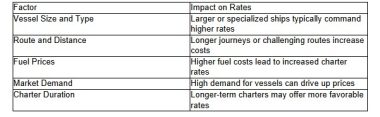
Factors Influencing Charter Rates
Several factors can impact the cost of chartering a ship:
Choosing the Right Charter Company
Selecting a reliable charter company is crucial for a successful shipping experience. Consider the following when making your choice:
- Reputation and track record in the industry
- Fleet size and variety of vessel types available
- Financial stability and insurance coverage
- Compliance with international maritime regulations
- Quality of customer service and support
The Role of Ship Brokers in Chartering
Ship brokers play a vital role in the chartering process, acting as intermediaries between charterers and ship owners. These professionals offer valuable services such as:
- Market analysis and rate negotiations
- Identifying suitable vessels for specific cargo needs
- Handling paperwork and legal requirements
- Providing expert advice on shipping routes and regulations
- Resolving disputes and managing communication between parties
Legal Considerations in Ship Chartering
Ship chartering involves complex legal agreements that require careful attention. Key legal aspects to consider include:
- Charter party agreements and their terms
- Liability and insurance requirements
- Compliance with international maritime laws
- Dispute resolution mechanisms
- Environmental regulations and responsibilities
The Future of Ship Chartering
The ship chartering industry is evolving with technological advancements and changing global trade patterns. Emerging trends include:
- Increased use of digital platforms for charter bookings
- Growing demand for eco-friendly and fuel-efficient vessels
- Integration of blockchain technology for improved transparency
- Adaptation to new trade routes, such as the Arctic passage
- Enhanced focus on cybersecurity in maritime operations
As global trade continues to grow and evolve, ship chartering remains a vital component of international logistics. By understanding the intricacies of this complex yet essential service, businesses can navigate the seas of global commerce with confidence, efficiency, and strategic advantage.