


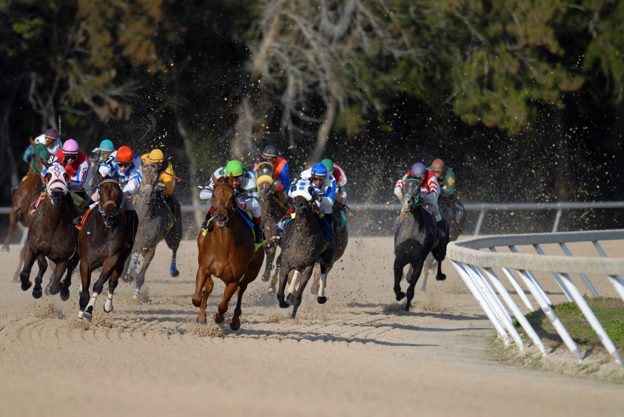
The 2026 Belmont Stakes already feels different. Saratoga Race Course will host the Triple Crown finale on Saturday, June 6, while Belmont Park undergoes redevelopment, with the race again run at 1 1/4 miles instead of its traditional 1 1/2-mile distance.
The shorter setup changes the equation. Stamina still matters, but tactical speed and positioning carry more weight around Saratoga’s tighter turns. Golden Tempo and Renegade deserve favorite status, yet potential Belmont upsets are a reality on racing’s grandest stage.
Why This Year’s Belmont Stakes Feels Different
Saratoga’s tighter turns and shorter stretch create a more aggressive style of racing than Belmont Park. Horses can’t wait too long before making a move, especially with the race again being run at 1 1/4 miles instead of its traditional marathon distance.
Traditional Belmont winners often wear rivals down gradually over 1 1/2 miles. Saratoga’s temporary configuration shifts the emphasis toward horses with quicker acceleration and stronger tactical positioning entering the far turn.
Several traits suddenly become much more important:
- Tactical speed leaving the far turn,
- Fresh legs after skipping Triple Crown races,
- Smart positioning through Saratoga’s tighter layout,
- Adaptability to Saratoga’s deeper racing surface.
Pace could be an important difference maker in this year’s Belmont. Front-runners who burn too much energy early may fade late, while Saratoga’s shorter stretch hurts deep closers rallying from far back. That gives mid-pack stalkers a tactical edge this year, especially around Saratoga’s tighter turns.
1. Growth Equity
Growth Equity may be arriving at the perfect time. Chad Brown’s colt skipped the Kentucky Derby and Preakness entirely, giving him a major freshness advantage over rivals coming off demanding Triple Crown campaigns.
His Grade 3 Peter Pan Stakes win on May 9 carried more weight than the final time suggested. Over a tiring Aqueduct surface, Growth Equity rallied strongly to earn a 93 Beyer Speed Figure and 98 Equibase Speed Figure, numbers not far off those posted by top contenders in the division.
Fresh horses often thrive in the Belmont, and recent winners like Arcangelo and Tonalist followed the same Peter Pan-to-Belmont path. That trend makes Growth Equity especially interesting in Belmont Stakes betting, despite still being slightly overlooked.
His pedigree adds to the appeal. Growth Equity is by Nyquist, and his Peter Pan win under Flavien Prat suggested he can settle and finish effectively if the Belmont pace turns honest.
2. Commandment
Public perception changes quickly after the Kentucky Derby. One troubled trip can erase months of brilliance in the eyes of bettors, and Commandment feels like the perfect example. His form remains stronger than it appears.
Before Churchill Downs, Brad Cox’s colt looked like one of the best three-year-olds in America after dominant wins in both the Fountain of Youth Stakes and Florida Derby. His tactical style and controlled acceleration made him a serious Triple Crown threat entering May.
Everything unraveled in Louisville. A slow break forced Commandment farther back than usual, traffic problems followed, and wide turns cost him valuable ground throughout the race. Despite the nightmare trip, he still fought late to finish seventh instead of fading completely.
Saratoga may suit him better. His stalking style looks well matched to the tighter layout, and his recent form suggests the Derby did not completely dull his edge. With a cleaner trip and a more favorable setup, Commandment looks like a credible rebound threat.
3. Ottinho
Ottinho brings an appealing mix of pedigree, consistency, and upside. Chad Brown’s homebred colt has quietly emerged as an interesting sleeper in the Belmont picture over the course of the spring prep season.
Saratoga rewards horses that handle its demanding surface, and Ottinho appears well-suited to the challenge. His second-place finish in the Blue Grass Stakes showcased legitimate class, especially after posting a 91 Equibase Speed Figure against elite company.
Brown’s patient approach may prove important here. Minor issues earlier this spring caused the barn to bypass more aggressive plans, allowing Ottinho to arrive at the Belmont fresher than several rivals coming off tougher campaigns.
Ottinho has remained in the Belmont picture through the spring, and Chad Brown’s colt continues to appeal as an interesting outsider if he takes another step forward.
4. Emerging Market
Emerging Market remains the biggest wildcard in the field. His experience is limited, though his upside may be significant after a rapid rise through the three-year-old division. His ceiling may be higher than most contenders.
His Louisiana Derby victory stunned many observers because it came in only his second career start. Horses rarely jump that quickly into Grade 2 success without possessing genuine talent and natural class at such an early stage.
The Kentucky Derby result looked disappointing on paper, but context matters. Emerging Market entered Churchill Downs with very little experience and faced a much tougher test in the Kentucky Derby than he had in the Louisiana Derby.
Late-developing horses often improve rapidly during Triple Crown season, and Emerging Market’s pedigree suggests he could thrive at Saratoga. His stalking style also fits the 1 1/4-mile setup, making further improvement especially dangerous.
5. Ocelli
Ocelli represents the kind of gritty longshot racing fans love to rally behind. Whit Beckman’s colt keeps showing up, competing hard, and outrunning expectations against stronger competition throughout the Triple Crown season.
His third-place finish in the Kentucky Derby at 70-1 stunned the betting public. Two weeks later, he returned in the Preakness and delivered another determined effort against elite rivals despite the demanding quick turnaround.
Modern Triple Crown campaigns usually prioritize rest and careful spacing, but Ocelli comes from a more old-school mold. Durability remains his defining trait, even as some question whether the demanding spring schedule could catch up with him.
Pace could decide everything for Ocelli. An aggressive early pace would likely help Ocelli, whose closing style gives him a better chance if the race begins to break down late. Battle-tested closers can become dangerous when the tempo softens up front, and Ocelli fits that kind of profile.
The Belmont Stakes May Be More Open Than It Looks
Every Belmont Stakes develops its own personality. Saratoga’s temporary configuration adds another unpredictable layer to this year’s race. Freshness, tactical positioning, and pace dynamics may matter more than raw reputation once the field turns for home.
Golden Tempo and Renegade deserve respect, but several overlooked challengers have legitimate upset potential this year. Growth Equity’s freshness, Commandment’s rebound potential, and Ocelli’s toughness could all reshape the race once the pace begins to unfold.
*Content reflects information available as of 22/05/2026; subject to change