

A new campaign is warning parents about the hidden dangers of counterfeit toys, after more than 259,000 fake toys worth over £3.5 million were seized at the UK border so far this year.
The “Fake Toys, Real Harms” campaign, launched by the Intellectual Property Office (IPO), highlights the growing threat of unsafe imitation toys flooding the market and the serious health and safety risks they pose to children.
Alarming Scale of Counterfeit Seizures
According to the Home Office, 53 shipments of counterfeit toys have been intercepted by UK Border Force in 2025 alone, equivalent to 24 tonnes of goods stopped before reaching consumers.
Around 90% of the seized items were counterfeit Labubu dolls, with 236,000 fake versions of the popular collectible confiscated. Experts estimate the total value of the haul at nearly £3.3 million.
But officials say this is only part of a wider and worsening problem. Criminals are targeting a growing range of toys across categories, from plush animals to battery-powered gadgets, many containing banned chemicals, choking hazards, and faulty parts that would fail legal safety checks.
“Behind the Packaging Can Be Real Danger”
The IPO’s Deputy Director of Enforcement, Helen Barnham, said the findings show why parents must stay vigilant:
“With counterfeit toys, what you see is rarely what you get. Behind the packaging can be hidden choking hazards, toxic chemicals and faulty parts that put children in real danger. These products have bypassed every safety check the law requires, which is why we’re working with our partners to keep these dangerous fakes out of UK homes.
Our ‘Fake Toys, Real Harms’ campaign aims to raise awareness among parents and present buyers of the hidden harms associated with counterfeits. Child safety must come first, so we’re urging parents – please don’t let your child be the tester.”
Phillip Holiday, Border Force regional director, added:
“Border Force has seized over 259,000 dangerous counterfeit toys worth £3.5 million this year, preventing them from reaching UK families. We work with partners to identify and intercept these dangerous products at UK borders, disrupting criminal networks and protecting children from unsafe toys.”
Safety Concerns — and Parental Awareness Gap
Testing carried out by Trading Standards and the IPO found that 75% of counterfeit toys fail safety checks, with many containing illegal levels of chemicals or small detachable parts that pose a choking risk.
Consumer research mirrors those dangers: 46% of people who purchased counterfeit toys reported serious safety issues, including toys breaking instantly, unsafe labelling, toxic smells, and even reports of illness in children.
Despite high awareness of counterfeit products, 92% of toy buyers know fakes are being sold in the UK, most consumers still prioritise price.
According to IPO data, seven in ten buyers say cost is their main motivation, compared with just 27% who cite safety as a factor when choosing toys.
Campaign Highlights Hidden Dangers
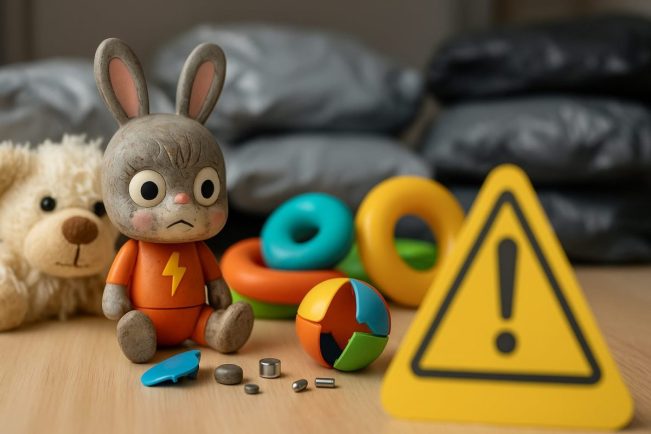
The Fake Toys, Real Harms campaign aims to change that mindset. Backed by toy retailers, Trading Standards, local authorities and parenting influencers, it uses striking visuals showing fake toy packaging re-imagined to expose “hidden harms.”
The materials are being shared widely on social media, where many fakes are sold, directing buyers to www.faketoys.co.uk for guidance on spotting counterfeits.
Parenting influencer “Budgeting Mum” said she supports the initiative:
“As a parent you just want the peace of mind that the toys you buy are safe for your children. What looks like a bargain can turn out to be something unsafe or even dangerous. With so many people buying toys online now, it can be even harder to spot the fakes. You can’t hold the toy in your hands or check the packaging properly. That’s why this campaign matters: it gives parents like me the confidence to know what to look for, so we can protect our kids.”
How to Avoid Counterfeit Toys
Before you buy:
- Purchase from trusted retailers or official brand websites.
- Be cautious with third-party sellers on marketplaces.
- Read reviews carefully, including negative ones.
- Be wary of prices that seem too good to be true.
- Check whether the toy has been recalled by searching its brand and product name.
When the toy arrives:
- Look for a UKCA or CE safety mark and a UK contact address.
- Ensure the packaging looks professional and includes age warnings.
- Inspect the toy for loose small parts, stuffing, or unsecured batteries.
If you spot a counterfeit or unsafe toy:
Don’t give it to your child; return it immediately.
Leave a review to warn other buyers.
Report the seller to the platform you used.
Contact Trading Standards to help prevent other families from being affected.