


International travel from the UK has rebounded strongly in recent years, and China is once again appearing on the itineraries of British travellers.
Whether for business, study, family visits or tourism, residents of Droitwich and the wider Worcestershire area are increasingly looking east.
However, travelling to China can feel very different from visiting other long-haul destinations, particularly when it comes to digital access and everyday communication.
For those planning a trip, understanding the practical realities before departure can make a significant difference. From internet restrictions to cultural expectations, careful preparation helps ensure a smoother and more enjoyable experience.
Why UK travellers are heading to China
China attracts visitors for many reasons. Some travel for professional reasons, particularly in manufacturing, education, and international trade. Others visit family members, attend academic programmes, or explore the country’s rich cultural heritage. Historic cities such as Beijing and Xi’an, modern hubs like Shanghai and Shenzhen, and natural landmarks including the Yangtze River and Guilin’s landscapes all remain popular.
For first-time visitors especially, the scale and pace of Chinese cities can feel overwhelming. This makes preparation all the more important.
Understanding internet access in China
One of the biggest adjustments for UK travellers is China’s digital environment. Many commonly used Western platforms are restricted, including:
● Google services (Search, Maps, Gmail)
● Facebook and Instagram
● X (formerly Twitter)
● YouTube
This means travellers cannot rely on their usual apps in the same way they might elsewhere. Instead, local alternatives are widely used, such as WeChat for messaging and payments, Baidu for search, and local mapping services.
Because of these differences, having reliable mobile data becomes especially important. Access to translation tools, maps, transport apps and accommodation details can significantly reduce stress, particularly in large cities where English is not always widely spoken.
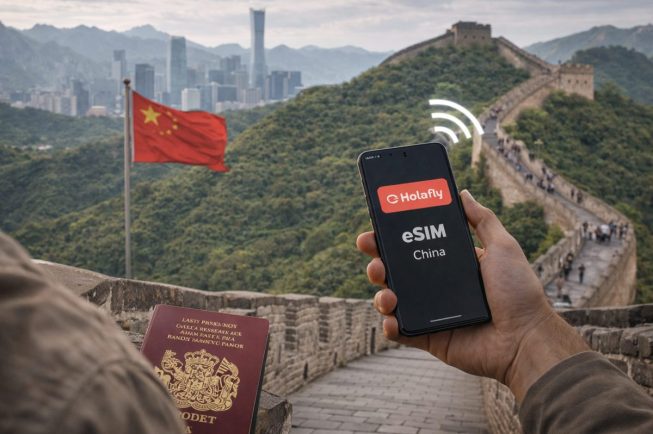
Some travellers choose roaming plans, while others look for dedicated travel data solutions. Options like Holafly’s esim for China are often mentioned by frequent travellers as a way to maintain mobile connectivity without relying on public Wi-Fi networks, which can be inconsistent.
Mobile payments and everyday transactions
China is largely a cashless society. Mobile payment systems are used almost everywhere, from supermarkets and restaurants to taxis and street vendors. Even small purchases are often completed via smartphone.
While UK bank cards may work in hotels and international businesses, travellers are advised to:
● set up payment apps in advance if possible
● carry some cash as a backup
● inform their bank of international travel
● check daily spending limits
Mobile data access plays a role here too, as payment apps and digital receipts depend on a stable connection.
Getting around: transport and navigation
China’s transport infrastructure is extensive and efficient, but it can be complex for visitors. High-speed trains connect major cities, while metro systems in urban areas are vast and busy.
Navigation apps are essential for:
● checking train times
● booking tickets
● navigating metro systems
● ordering taxis or ride-hailing services
Because Google Maps is restricted, travellers often need alternative mapping tools, making it important to download apps and offline resources before arrival. Again, a dependable mobile connection helps ensure access to real-time information.
Cultural considerations for UK visitors
Cultural awareness goes a long way in China. While many customs are straightforward, visitors should keep a few key points in mind:
● Formality is valued in professional settings
● Business cards are often exchanged with both hands
● Queuing norms may differ from those in the UK
● Direct confrontation is generally avoided
● Respect for local laws and regulations is expected
Language barriers can also arise, particularly outside major tourist areas. Translation apps and messaging tools can help bridge the gap, but only if travellers can access them reliably.
Health, safety and travel preparation
As with any long-haul journey, travellers should ensure they have:
● comprehensive travel insurance
● required visas arranged well in advance
● copies of important documents stored digitally
● emergency contact details saved offline
● access to healthcare information
Mobile connectivity can be helpful in unexpected situations, whether locating a pharmacy, contacting accommodation providers, or checking travel updates.
Staying connected without complications
Public Wi-Fi is available in some hotels, cafés and airports, but it may be slow or restricted. For travellers who rely on their phone for navigation, communication and planning, having their own data connection can provide reassurance.
Digital eSIM solutions are increasingly popular because they allow travellers to set up connectivity before departure and avoid searching for local SIM cards on arrival. This approach can be particularly useful for short trips or busy itineraries where time is limited.
Final thoughts for Droitwich travellers
Travelling to China can be a rewarding and eye-opening experience, offering insight into a culture and society very different from life in Worcestershire. However, it does require a little more preparation than some other destinations.
By understanding how internet access works, planning for mobile payments, and preparing for cultural differences, travellers can focus more on the experience itself and less on practical challenges. Reliable connectivity, thoughtful planning and a flexible mindset all contribute to a smoother journey.